
Pascal's ball
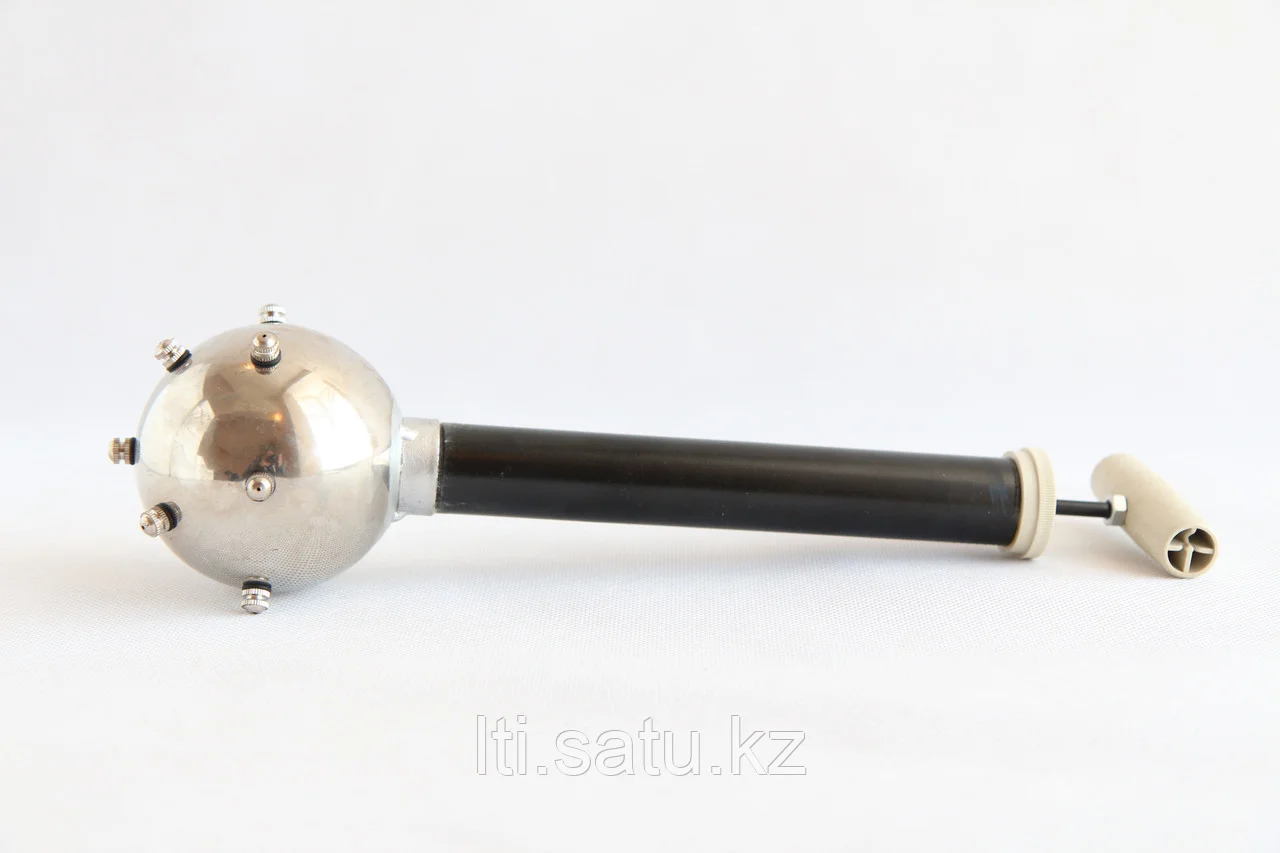
Pascal's ball
Pascal's balloon is used to demonstrate the transfer of pressure produced on a liquid in a closed vessel, and to demonstrate the rise of a liquid under the action of atmospheric pressure.
When external forces act on solids, the pressure is transmitted in the direction of the force. Liquids and gases behave differently when external forces act on them.
The French scientist Blaise Pascal (1623-1662) discovered that all liquids and gases transmit the pressure produced on them in all directions equally. This statement is called Pascal's law.
The property of liquids to transmit the pressure produced on them equally in all directions is clearly demonstrated in the experiment with Pascal's ball. When the piston is pushed into the tube, a part of water is pushed out of the ball in the form of jets flowing along the normal to the surface of the ball from all holes, not only in the direction of the piston pressure force.
Product weight: 0.47 kg
Volume: 0.004
 English
  Русский
  Қазақ тілі